the Bronx and the lower Westchester towns along its northern edge
Mold Removal in the Bronx and Lower Westchester
Tell us the address and what you are looking at, and we will tell you which job you actually have, who is allowed to do it, and what order it has to run in. Over ten square feet New York requires a licensed assessor and a licensed remediator who cannot be the same company, and inside the New York City line two further rules stack on top of that. We arrange the work and we do not perform it, so nothing we tell you about what your building needs is a quote in disguise.
Request a Quote
Tell us what you can see, where the water came from, and whether the building is yours or somebody else's. That is usually enough for us to say which trade you need, and who is on the hook for paying, before anyone comes out.
Would you rather talk it through? Call (315) 640-3590, answered 24/7.
$100 off your first job
Credited by us on your first booked job.
- One credit per customer per property, on your first booked job.
- Valid through December 31, 2026.
Mention this offer when you book. Full terms.
Assessment, removal, drying, violation response. Most callers need one.
Four different jobs get called mold removal around here, and New York licenses two of them separately and will not let one company sell you both. Which one you need depends on how much there is, how long the water has been there, and whether somebody with authority has already handed you a deadline.
Mold Inspection and Assessment
Find out what is growing, how far it reaches and what water is feeding it, in writing, before anyone quotes a dollar to remove it.
Start here if you can see it or smell it, and nobody has written a scope for it yet.
About Mold Assessment →Mold Remediation and Removal
Get the mold and the material it is living in out of the building, to a plan somebody independent wrote, with the work checked afterwards by that same independent party.
Start here if somebody independent has written a scope already, and you need the work done to it.
About Mold Remediation →Water Damage Drying and Dry Out
Get the building dry inside the window where wet material is still just wet material, before a water problem turns into a licensed mold project.
Start here if water got in recently and nothing has started growing yet.
About Water Damage Drying →Mold Violation Response for Building Owners
Work out exactly what a dated mold violation, or a tenant complaint you have not answered yet, requires you to do, in what order, and who is allowed to do it.
Start here if somebody with authority has given you a date, and you need the right parties in the right order.
About Violation Response →Not sure whether you need an assessor or a remediator?
They are two different licenses in New York and you cannot buy both from one company. Describe what you are looking at and we will tell you which one comes first.
How a job runs here
New York sets the order, and inside the city line it sets the paperwork too. This is what that looks like from your side of it.
Tell us the address and what you see
The address decides which rules apply and the unit count decides the rest. We work that out before anyone comes to look, so you are not paying a visit to find out which trade you needed.
An independent assessment finds the water
Above ten square feet the state requires a licensed assessor who is not the remover. They map the moisture and write the plan the removal has to follow, and in this housing stock that usually means finding a cold surface rather than a broken pipe.
Removal to that plan, then written clearance
A licensed remediation contractor works to the assessor's plan, and the assessor comes back to issue a written clearance report before containment comes down. In a Bronx building of ten or more units, the plan and the clearance are filed with the city as well.
What makes this a local problem
New York Labor Law section 936 states that no licensee shall perform both mold assessment and mold remediation on the same property, and that no person may own an interest in both the assessing licensee and the remediating licensee on that property.
Source: New York State Senate, accessed 2026-09-16
New York City Administrative Code section 24-154, added by Local Law 61 of 2018, defines a covered building as one containing ten or more dwelling units or sitting on a zoning lot with 25,000 or more square feet of non-residential floor area, and a covered person as the owner, the managing agent or an employee of either. For a project, meaning mold work on an area greater than ten square feet, no covered person may perform the assessment, abatement or remediation, and the work must be done by a person licensed under Article 32 of the state Labor Law.
Source: The City of New York, Local Law 61 of 2018, accessed 2026-09-16
Under the 1991 to 2020 hourly climate normals at LaGuardia Airport, the station nearest the Bronx, the normal July dew point averages 63.1 degrees Fahrenheit and never falls below 60.3 degrees at any hour of the day. August is the same, averaging 63.1 degrees.
Source: NOAA National Centers for Environmental Information, accessed 2026-09-16
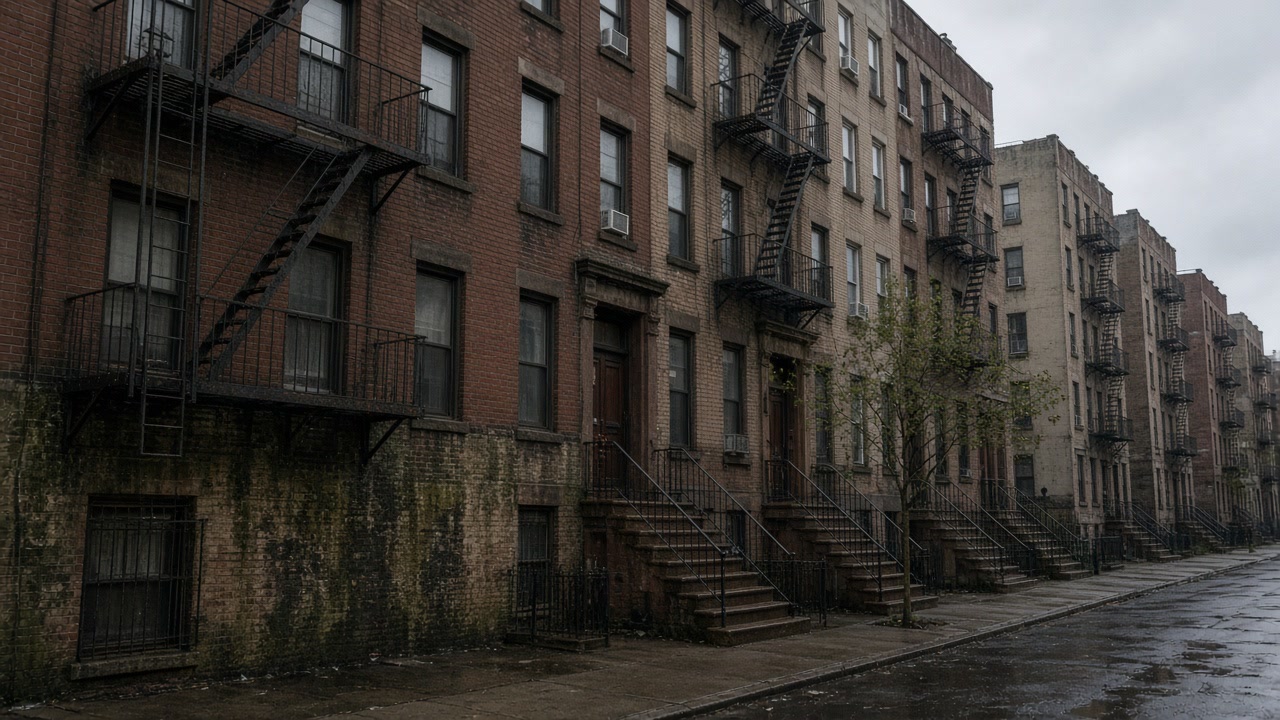
In Bronx County the median year of construction is 1955, 33.3 percent of the 559,415 housing units were built in 1939 or earlier and 77.9 percent before 1980, against a national median of 1980 and a national pre-1940 share of 11.7 percent.
Source: US Census Bureau, American Community Survey 2020-2024 5-year, accessed 2026-09-16
One housing market, two sets of rules
A twelve-family in Mount Vernon and the identical building in the Bronx are not governed the same way. Both are under state Article 32, which above ten square feet requires a licensed assessor and a licensed remediator who may not be the same party.
Inside the New York City line, two more layers stack on top. Local Law 55 of 2018 puts an annual inspection duty for mold on any building with three or more dwelling units. Administrative Code 24-154, added by Local Law 61 of 2018, goes further at ten or more units: the owner, the managing agent and their own employees are barred from doing the work themselves, and the work plan and the clearance are both filed with the city.
Which of those you are in is decided by your address and your unit count, and getting it wrong is expensive in both directions. Send us the address and you will know where you stand before anybody quotes anything.
Why homeowners call us first
We tell you which side of the city line you are on
Article 32 is statewide. Local Law 55 and the Local Law 61 filings stop at the New York City border, so an identical twelve-family sits under three layers of rules in the Bronx and one in Mount Vernon. Knowing which one is yours changes who may do the work and what it costs.
We do not sell the removal
Our fee does not grow with the size of the scope. That is why we can tell you a patch is small enough to handle yourself, and why we would rather say it on the phone than after a visit.
We chase the water, not the stain
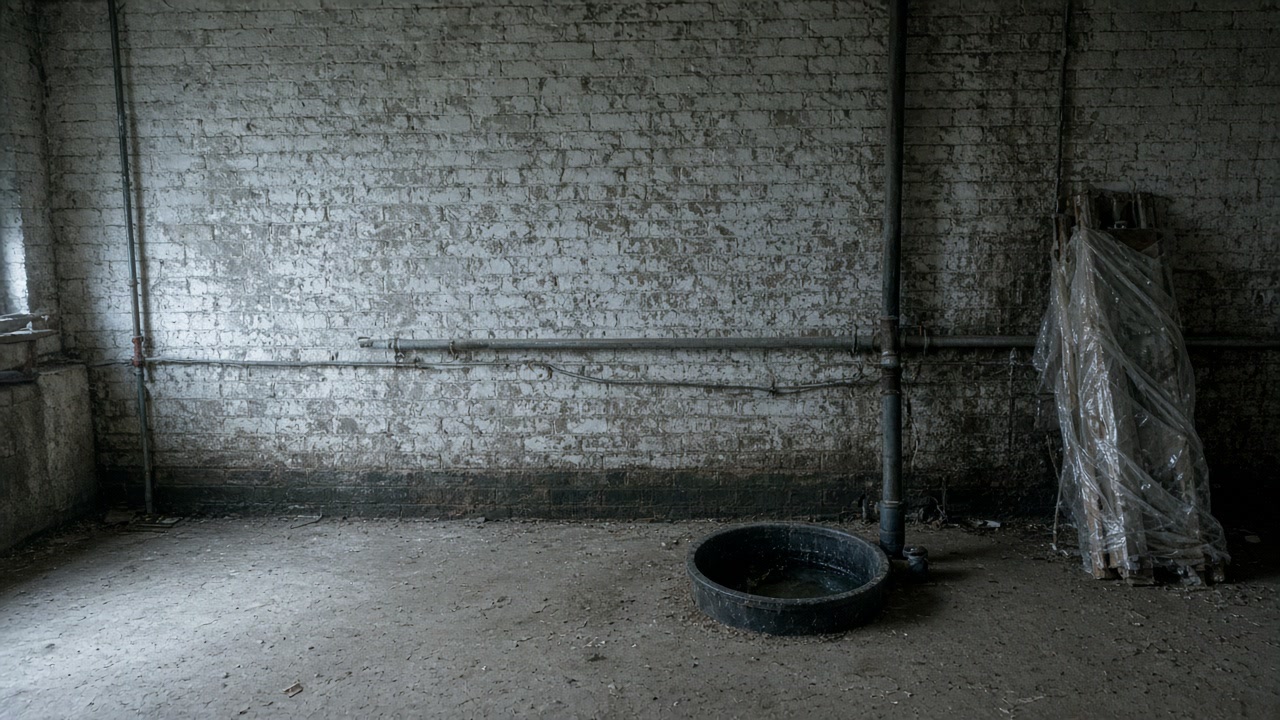
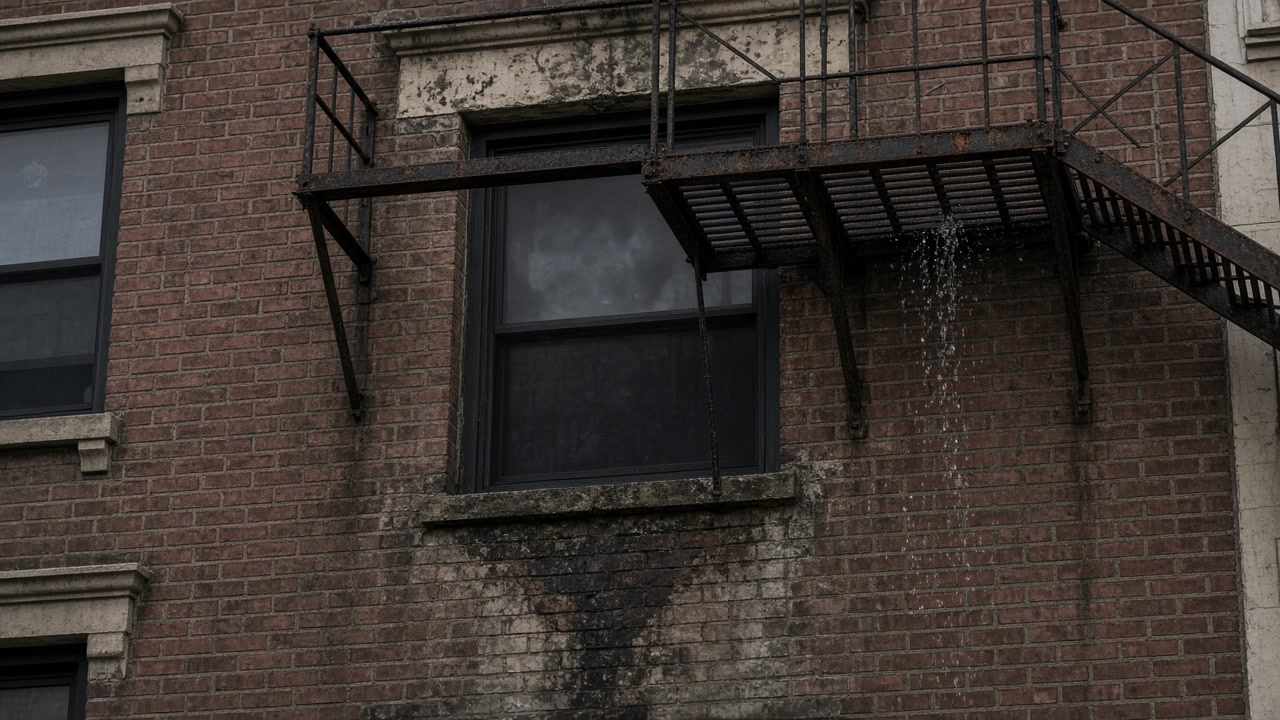
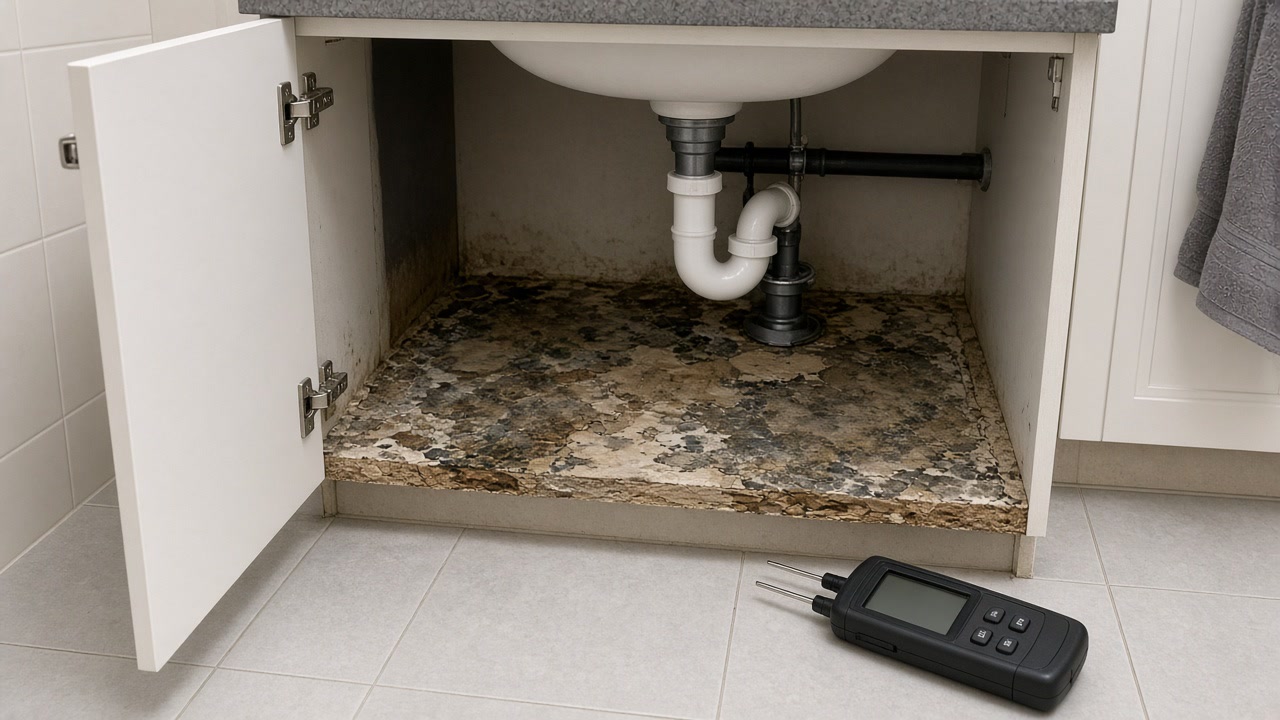
Most mold here has no leak behind it. July dew points at LaGuardia average 63 degrees and never drop below 60 at any hour, so any below-grade surface cooler than that makes its own water out of ordinary summer air. Paint over that and you have bought one season.
No number for removal before there is a plan
The New York State Department of Labor says a remediation estimate should not be given before an independent assessment exists, because the remediator is working from the assessor's plan. Anyone quoting before that is guessing, or intends to be both parties.
Coverage across the Bronx and the lower Westchester towns along its northern edge
The questions people ask before they call
How much mold do I need before I have to hire anyone?
Less than about ten square feet, roughly a three foot by three foot patch, and the EPA says most homeowners can handle the cleanup themselves. New York draws its licensing line in the same place: under ten square feet you are not in the licensed system at all, and a residential owner working on their own property is exempt whatever the size. If that is your situation, dry the surface, find the water, and keep your money.
Should I have the air tested first?
Usually not. The New York State Department of Health says mold testing is generally not recommended, that no regulatory agency requires it, and that there is no state or federal standard for spore levels in indoor air to compare a result against. If you can see it or smell it, the money is better spent finding the water than buying a number with nothing to measure it against.
Why can one company not inspect it and then remove it?
New York Labor Law section 936 says no licensee may perform both mold assessment and mold remediation on the same property, and that nobody may hold an interest in both firms on that job. The rule exists so that the company deciding how much work you need is not the company paid by the answer. Above ten square feet your job has two independent parties in it, and that is in your favor.
I rent. Is any of this mine to arrange?
Probably not, and you should not be paying for it. Inside New York City, Local Law 55 of 2018 makes mold in a building of three or more units the owner's duty, checked annually, and city inspectors recorded 20,424 mold violations in the Bronx in 2024, so the complaint route is well worn: 311 sends it to HPD. In Yonkers, Mount Vernon, Pelham and New Rochelle there is no equivalent local law, so it runs through the building department and the warranty of habitability instead. Ask us if you want help reading what your landlord has to do, but do not hire a contractor on your own account.
Does the same rule apply just over the city line?
No, and that is where owners get caught. Article 32 is statewide, so the two-company rule applies in Yonkers exactly as it does in Fordham. The city laws stop at the border. In a Bronx building of ten or more dwelling units, Administrative Code 24-154 bars the owner, the managing agent and their employees from doing the mold work at all; in Mount Vernon that same owner's own staff lawfully may. Give us the address and the rest follows from it.
There is no leak anywhere. Can it still be mold?
Yes, and around here it usually is. The July dew point at LaGuardia averages 63 degrees and never falls below 60 at any hour, so a below-grade wall or slab cooler than that pulls water out of ordinary summer air with nothing broken. In winter the same thing happens on the cold inner face of an uninsulated masonry wall, which is why it turns up in closets and behind furniture pushed against the outside wall. Looking for a burst pipe and finding none does not mean there is nothing to fix.
Start with what you can see
Phones are answered around the clock, and there is no obligation in finding out where you stand.