the Bronx and the lower Westchester towns along its northern edge
Mold Inspection and Assessment in the Bronx
Find out what is growing, how far it reaches and what water is feeding it, in writing, before anyone quotes a dollar to remove it.
Mold Assessment quote
Tell us what you can see, what the room smells like and roughly how big the patch is. Size is the first thing that decides whether this is a licensed project or a Saturday.
Would you rather talk it through? Call (315) 640-3590, answered 24/7.
$100 off your first job
Credited by us on your first booked job.
- One credit per customer per property, on your first booked job.
- Valid through December 31, 2026.
Mention this offer when you book. Full terms.
What an assessment puts in writing
A mold assessment is an independent inspection that finds the mold, finds the water feeding it, measures how far it reaches, and ends in a written remediation plan. In New York the assessment is its own license, and the assessor cannot be the company that later does the removal. The plan has to name the rooms, the method for each area, the quantities of material to be cleaned or taken out, the clearance criteria, the protective equipment, how occupants are notified, an estimate of cost and time, and, where it can be identified, the source of the water. That document is what a removal contractor then prices and works to, which is why it comes first.
- Room by room inspection of visible growth, staining and the materials behind it
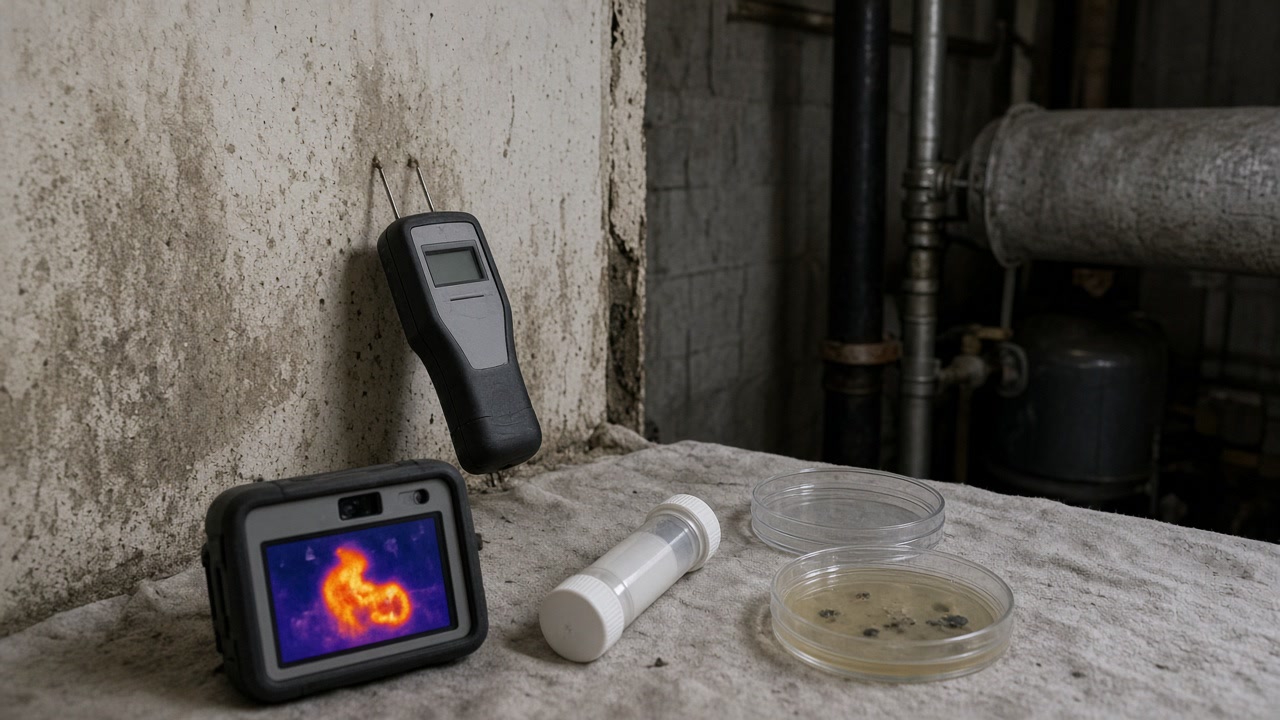
- Moisture mapping with meters and thermal imaging, including masonry walls and below grade slabs
- Air or surface sampling, used where a smell has no visible source or a claim has to be documented
- A project specific written remediation plan the removal contractor has to follow
- Post remediation assessment and the written clearance report that lets containment come down
- The post remediation filing a New York City building of ten or more units has to make
What changes how long an assessment takes
An assessment is priced by how much of the building has to be opened up or measured before the question can be answered honestly. These are the things that move it here.
How much you can already see
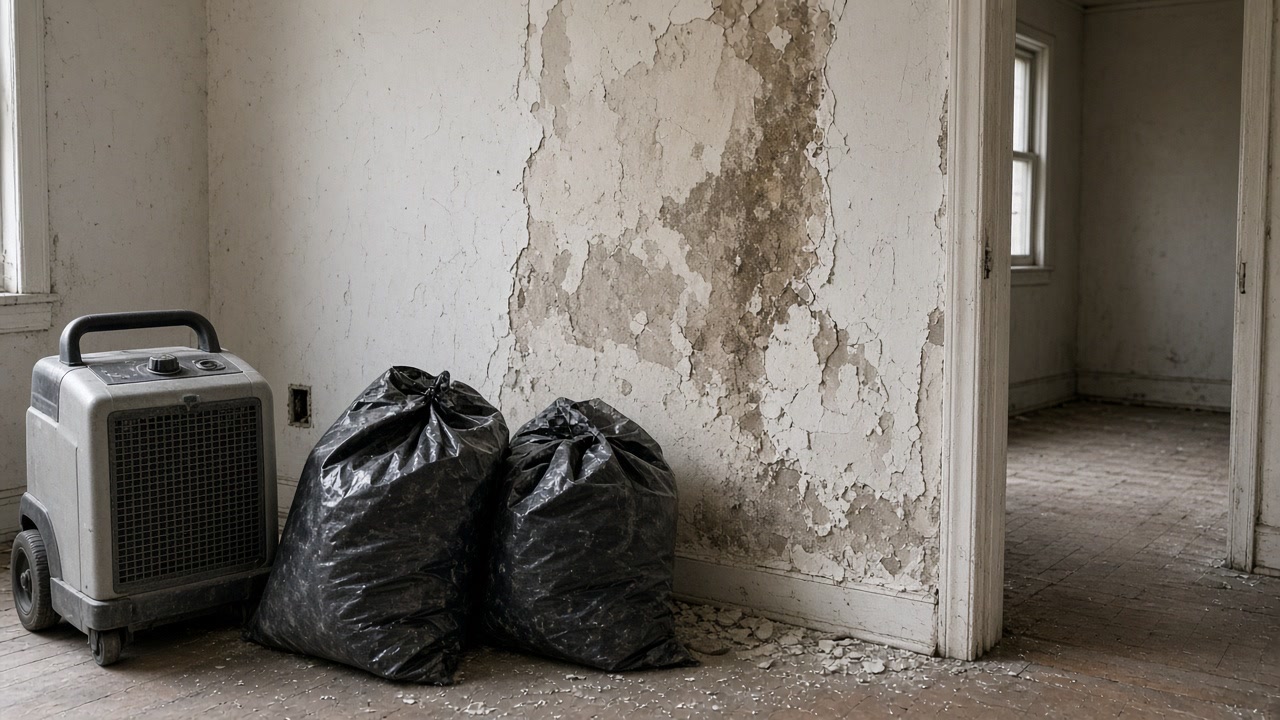
The measured area decides everything downstream. Under about ten square feet the EPA says most homeowners can handle the cleanup themselves, and New York does not treat it as a regulated project. Over it, the job needs two separate licensed parties.
Whether the water has a source you can point at
A great deal of mold in this housing stock has no leak behind it. The July dew point at the nearest station averages 63.1 degrees and never falls below 60.3 at any hour of the day, so any cool below grade surface pulls water out of ordinary summer air. Finding that takes longer than finding a burst riser.
The age and construction of the wall
A third of Bronx housing units were built in 1939 or earlier and the median year of construction is 1955. Solid masonry has no cavity to inspect and no drainage plane, so the assessor is reading temperature and moisture through the wall rather than opening a stud bay.
Whether the growth is hidden
The city rule counts mold inside a wall cavity as an indoor mold hazard, so suspected growth behind plaster, under a floor or in ductwork has to be resolved rather than assumed. That is the single most common reason a scope grows.
Who else is going to read the report
A managing agent, a co-op board, a buyer, an insurer and a city inspector each need something different in the document. Say at the start who it is for, because it changes what the assessor records.
How many apartments are in the building
Inside the city line a building of ten or more dwelling units is a covered building, and the assessor has a post remediation filing to make with DEP within seven days of finishing. That is part of the engagement, not an extra.
Whether anyone is living in it
An occupied apartment brings notice duties and changes how the work area is isolated. A tenant diagnosed with moderate or severe persistent asthma brings an owner of a building of any size inside the city mold duty.
Not sure yet whether this is an assessment job
Describe the patch and where you think the water came from. Five minutes usually settles whether you need an assessor, a drying contractor or nobody at all.
How an assessment runs, from the first walk to the clearance report
Settle which rules the address is under
Article 32 applies across the state. Inside the city line, three or more dwelling units adds Local Law 55 and ten or more adds the DEP filings under Administrative Code 24-154. In Yonkers, Mount Vernon, New Rochelle and Pelham none of the city layers apply. This is question one, because it decides who is even allowed to touch the work.
Walk the property and record what is visible
Growth, staining, odor and the materials affected, photographed and measured. The tape measure matters more than it looks: area is what sets the violation class and the state licensing threshold.
Trace the moisture, not the mold
Meters and thermal imaging map wet material and cold surfaces behind the finish. In this stock the driver is more often a cold masonry wall or a below grade slab than a broken pipe, and the wet area almost always runs wider than the staining.
Sample only where it changes the answer
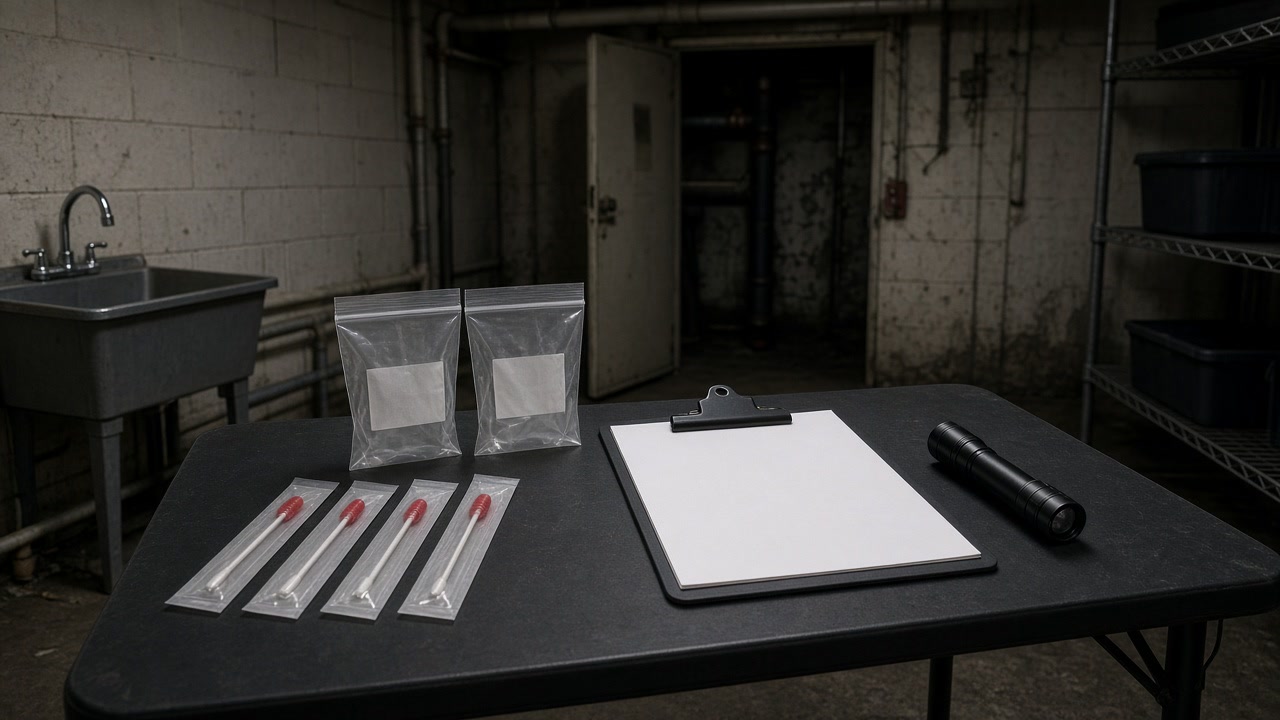
New York State's health department says mold testing is generally not recommended, is required by no regulatory agency, and has no state or federal standard to be compared against. Sampling earns its place when a smell has no visible source, or when a sale, a claim or a dispute needs the condition documented.
Write the remediation plan
Rooms, methods, quantities, containment, protective equipment, clearance criteria, occupant notification, an estimate of cost and time, and the moisture source where it can be identified. This is the document a remediator prices from.
Come back at the end and clear the work
Once removal is finished an assessment licensee verifies that the area is free from visible mold and issues the written clearance report. Containment stays up until that report exists, and in a covered building the post remediation assessment is filed within seven days.
Mold Assessment work we have arranged
What mold assessment looks like
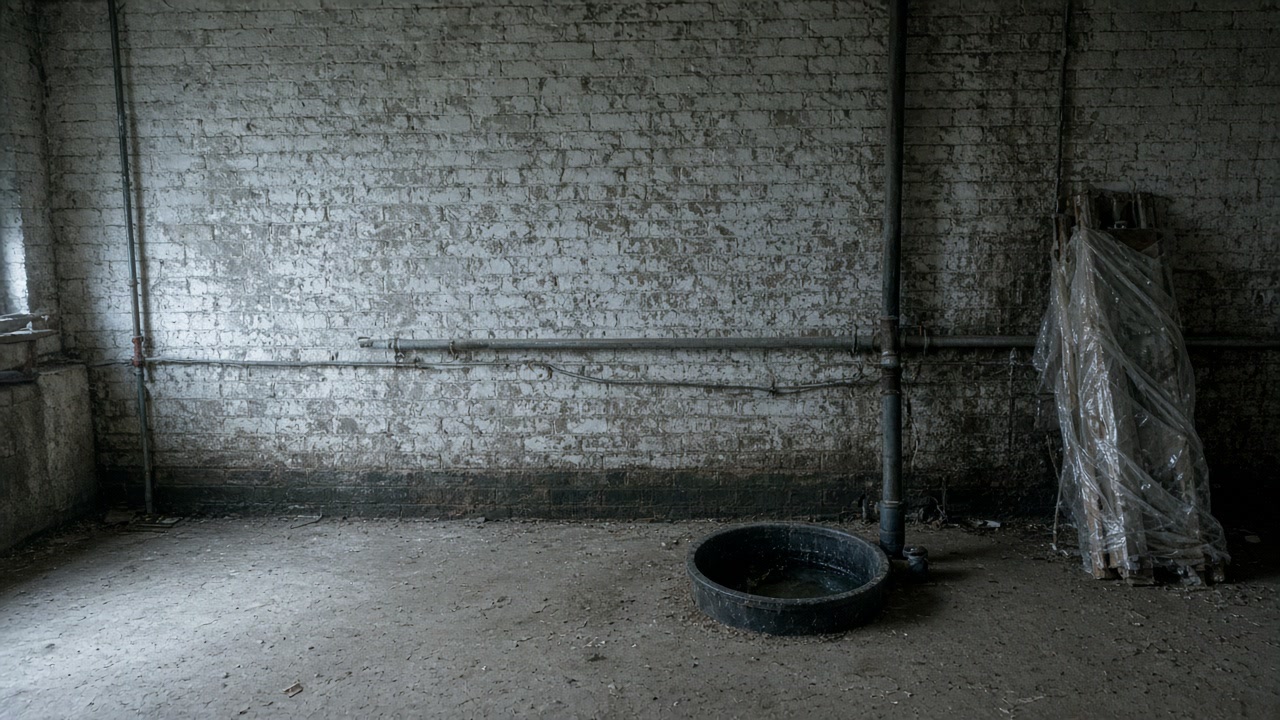
Where an assessment starts and stops
When you may not need this at all
- If the patch is under about ten square feet, roughly a three foot by three foot square, the EPA says most homeowners can handle the cleanup themselves and New York does not treat it as a regulated project.
- A residential property owner working on their own property is exempt from New York mold licensing altogether.
- If the leak happened in the last day or two and nothing has started growing, drying the material is the whole job. The EPA says material dried within 24 to 48 hours will in most cases not grow mold.
- Visible mold on tile or grout is not an indoor mold hazard violation under the city rule, so a bathroom grout line is usually cleaning and ventilation.
- If you rent, this is not your bill. Mold in a Bronx building of three or more apartments is the owner's statutory duty under Local Law 55, and the route is a complaint to 311, which goes to HPD.
What is out of scope
- Doing the removal. In New York one licensee may not perform both the assessment and the remediation on the same property, and no person may hold an interest in both licensees on that property.
- Repairing the roof, the pointing, the riser or the drain that let the water in. That is a separate trade and a separate contract.
- Asbestos and lead paint, both common in pre-1940 stock and both carrying their own licensing.
- Any opinion about anyone's health or symptoms.
- Deciding what an insurance policy covers, or filing a claim on your behalf.
- Legal advice about a lease, a violation or a dispute with a landlord or a board.
Where we arrange mold assessments
- Mold Assessment in Bronx
- Mold Assessment in Riverdale
- Mold Assessment in Pelham Bay
- Mold Assessment in Throgs Neck
- Mold Assessment in Fordham
- Mold Assessment in Mott Haven
- Mold Assessment in Morris Park
- Mold Assessment in Kingsbridge
- Mold Assessment in Yonkers
- Mold Assessment in Mount Vernon
- Mold Assessment in Pelham
- Mold Assessment in New Rochelle
Questions people ask before booking an inspection
Do I need an assessment if I can already see the mold?
Over about ten square feet in New York, yes, because the removal contractor cannot lawfully work to, or price, a scope it wrote itself. Under that line the EPA's guidance is that most homeowners can handle it, and the state does not treat it as a project.
Why will nobody give me a price before the inspection?
The New York State Department of Labor's position is that a remediation cost estimate should not be given before an independent assessment, because the remediator works from the assessor's plan. A number offered before that document exists is a guess with your name on it.
Is testing the same thing as an assessment?
No. The assessment is the inspection and the written plan. Testing is one optional tool inside it. The state health department says testing is generally not recommended and that no state or federal standard exists for mold or spore levels in indoor air, so a reading on its own settles nothing.
My building has ten apartments. Does that change the assessment?
Inside the city line it does. In a building of ten or more dwelling units the owner, the managing agent and their staff may not do mold work over ten square feet at all, the remediator files a work plan with DEP no later than two business days before starting, and the assessor files the post remediation assessment within seven days of finishing.
How do I check that an assessor holds a real license?
The New York State Department of Labor publishes the mold contractor register and you can search it yourself. On 16 September 2026 it listed 28 active mold assessment licenses and 36 remediation licenses at Bronx addresses. Ask for the number before the visit, not after.
Tell us what you can see and smell
We will confirm which licensed trade you are actually looking for, and there is no obligation in asking.